
Most planted tank builders spend hours obsessing over the substrate layers, the hardscape placement, the foreground carpet. Everything happening below the waterline gets meticulous attention. And then the surface? Completely ignored.
That's a mistake — and honestly, fixing it is one of the easiest improvements you can make to your entire setup.
Floating plants are the most underappreciated tool in the hobby. They pull excess nutrients out of the water column, suppress algae naturally, reduce fish stress, and add a completely different visual dimension to a tank that most aquascapes are missing. The best part? They're genuinely low maintenance. They just float there doing their job while you get on with everything else.
What Floating Plants Actually Do (Beyond Just Looking Nice)
Here's the biology that makes floating plants genuinely useful rather than just decorative.
Unlike submerged plants that have to extract CO2 dissolved in water — which is hard work — floating plants breathe atmospheric air directly through their leaves. This gives them an almost unlimited carbon supply, which means they grow fast and pull nutrients aggressively. Every gram of plant mass they build comes from nitrogen, phosphorus, and potassium absorbed directly from your water column through their roots.
That's real, active filtration happening at the surface of your tank. In practical terms: lower nitrates, less algae competition, cleaner water with less effort from you.
The shading effect is another benefit that doesn't get talked about enough. A partial canopy of floating plants diffuses your aquarium light before it hits the water, reducing the intensity that reaches your submerged plants. This is often exactly what an algae-prone tank needs — not less light overall, but more even, softer light distribution.
And for fish? The overhead cover changes behavior noticeably. Tetras, rasboras, and other species that stay hidden in brightly lit tanks become dramatically bolder when there's a natural canopy above them. For shrimp and fry, the trailing root systems of plants like Frogbit become a genuinely important shelter zone.
The Best Species to Start With
Red Root Floaters — When You Want Visual Impact

Red Root Floaters (Phyllanthus fluitans) are the showpiece of the floating plant world. Under strong light and with slightly limited nitrates, both the leaves and trailing roots turn a deep, vivid crimson — a striking contrast against the green of a planted tank below.
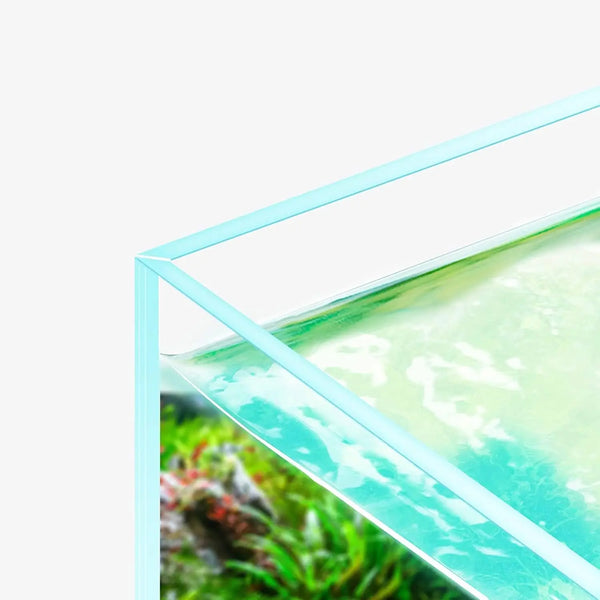
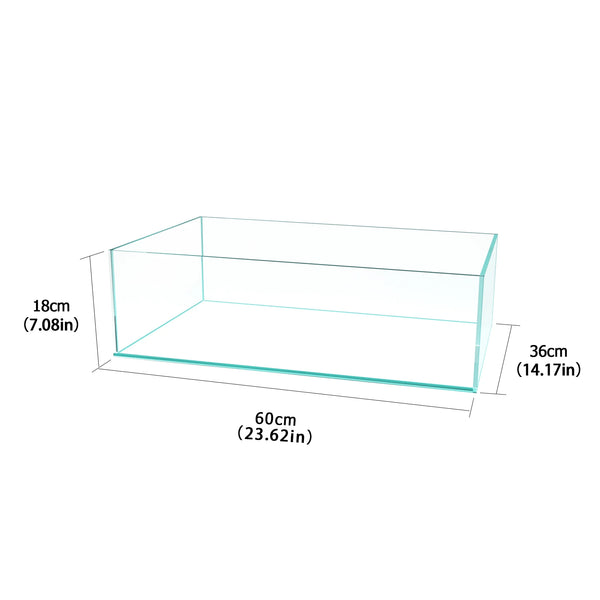
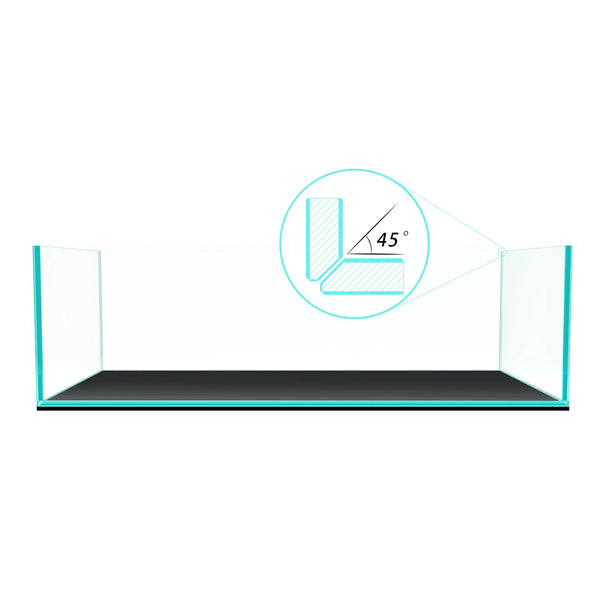
They're moderately fast growers and manageable enough that you won't be fighting them constantly. Best suited to open-top rimless tanks where they get direct light without condensation dripping on their leaves.
Amazon Frogbit — The Classic for Good Reason

Round lily-pad leaves, long fuzzy white roots hanging several inches into the water column, fast growth — Frogbit is a practical choice for almost any tank. The root structure is its standout feature. In a well-lit setup those roots become a dense underwater curtain that shrimp and fry use as a primary refuge.
It spreads quickly, which means it earns its place biologically within weeks of adding it. Just keep it away from strong surface flow — like all floating plants, Frogbit hates being pushed underwater or having its leaves constantly splashed.
Salvinia — The Texture Option for Nano Tanks

Salvinia is smaller and more textured than Frogbit, with leaves covered in tiny water-repellent hairs that give it an almost velvet appearance. It's an excellent choice for nano tanks or anywhere you want partial surface coverage without the aggressive spread of faster-growing species. Good for algae suppression in tighter spaces.
The One Thing That Kills Floating Plants (And How to Avoid It)

Surface agitation. That's it. That's the issue almost every time someone says their floating plants "just melted."
Floating plants are built to be dry on top and wet on the bottom. Their leaves need air contact to function. When a strong filter output or spray bar constantly pushes them around, flips them over, or splashes water onto the leaf surface — they rot. It happens quickly and it looks baffling if you don't know the cause.
The fix is simple: create a low-flow zone. A loop of airline tubing connected at both ends floats on the surface and corrals your plants away from the filter output. Takes two minutes to set up and completely solves the problem.
If you're building or rescaping a tank and want to design surface flow management into it properly from the start, the PlantedPro Aquascaping Tools Collection has what you need for precise setup work.
Light and Nutrients: The Two Other Variables
Because floating plants sit directly under your light source, light quality matters. A full-spectrum LED with good red output keeps Red Root Floaters red and keeps all your floaters growing steadily. The PlantedPro Twinstar LED is built for exactly this kind of planted tank application — proper spectrum, adjustable intensity, no overheating issues.
Nutrients are the other thing to watch. Floating plants feed entirely through the water column — your substrate and root tabs do nothing for them. In a lightly stocked tank, they can actually run out of available nutrients and go pale. Pale, yellowing leaves on floating plants almost always indicate iron or potassium deficiency. A quality liquid fertilizer dosed weekly sorts this quickly.
How to Keep Them From Taking Over

This is the actual ongoing management task with floating plants. Left completely alone, most species will cover your entire surface within a few weeks — blocking light from everything below.
Keep coverage at around 30 to 50 percent of the surface. Every week or two during your water change, physically remove a handful and discard it. This isn't just tidying — it's active nutrient export. Every plant you remove takes the nitrates and phosphates it absorbed permanently out of your system. It's the most satisfying form of water quality maintenance in the hobby.
Browse the full PlantedPro Aquarium Plants Collection for floating plants and everything else you need to complete your planted setup.
FAQ
(Q) Do floating plants need CO2?
= No — they absorb CO2 directly from the air, which is one of their biggest advantages over submerged plants.
(Q) Can I keep floating plants in a lidded tank?
= With caution. Tight-fitting lids cause condensation that drips onto leaves and causes rot. If you need a lid, prop it open slightly to allow ventilation and airflow.
(Q) Why are my Red Root Floaters staying green instead of turning red?
= Usually insufficient light intensity or too many nitrates in the water. High-output lighting and slightly reduced nutrient levels push the red coloration.
(Q) How often should I remove excess floating plants?
= Every one to two weeks during regular water changes. Aim to maintain 30–50% surface coverage — enough for the benefits without blocking light to submerged plants.


![Goose egg-shaped water weed tank [Water Grass+Seeds]](http://plantedpro.com/cdn/shop/files/Goose_egg-shaped_water_weed_tank_1.jpg?crop=center&height=600&v=1769858386&width=600)
![Goose egg-shaped water weed tank [Water Grass+Seeds]](http://plantedpro.com/cdn/shop/files/QQ-20230802230101_900x_9ed3f5bb-b5ca-4fe0-9505-966aa79d5c48.jpg?crop=center&height=600&v=1769858386&width=600)



![Pavilions Moss Microecological Landscape [Including Internal Plants + Decoration]](http://plantedpro.com/cdn/shop/files/Pavilions_Moss_Microecological.jpg?crop=center&height=600&v=1769842765&width=600)
![Tree of Life - Moss Microlandscape [Including Internal Plants + Decoration]](http://plantedpro.com/cdn/shop/files/Tree_of_Life_-_Moss_Microlandscape_Including_Internal_Plants_Decoration.jpg?crop=center&height=600&v=1769857907&width=600)
![Green Hills - Moss Microlandscape [Including Internal Plants + Decoration]](http://plantedpro.com/cdn/shop/files/Green_Hills_-_Moss_Microlandscape_Including_Internal_Plants_Decoration_1.jpg?crop=center&height=600&v=1769850640&width=600)
Leave a Comment